Championing American Biotech: A Forward-Thinking Approach to Global Competition
A Call for Proactive Biotech Investment Over Protectionist Stances
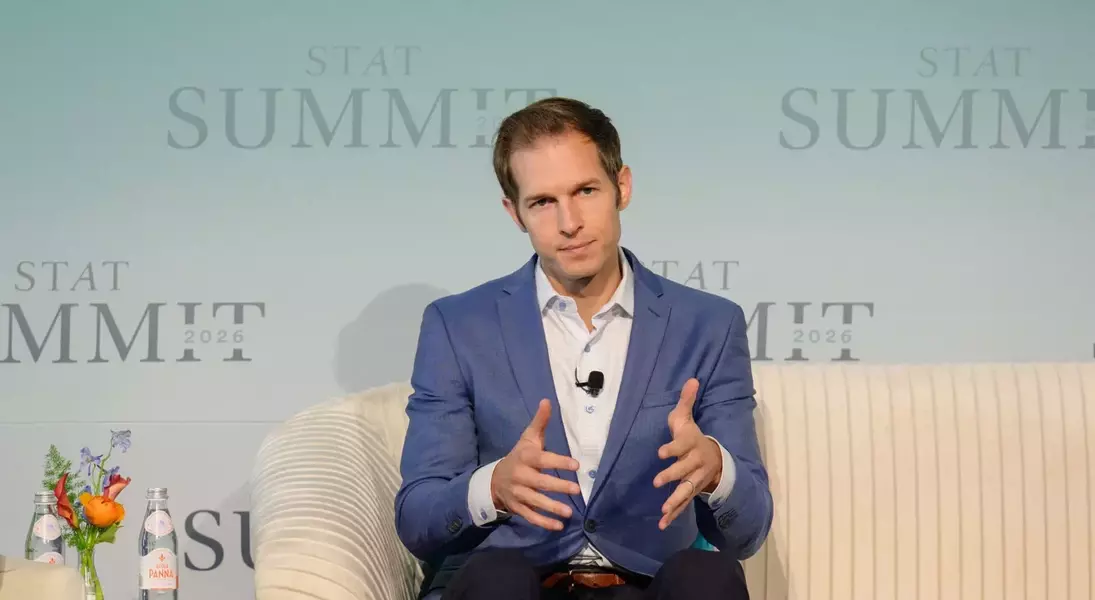
Massachusetts Representative Jake Auchincloss urges his legislative colleagues to unequivocally back the biotech sector, identifying insurance firms as the primary adversaries, and to cultivate the United States into a hub for biotech exploration. This strategy diverges from an overreliance on protectionist actions, especially concerning China's burgeoning biotech advancements.
Challenging the Prevailing Washington Consensus on China
Currently, there's a strong inclination in Washington to implement protectionist policies, particularly in technology, against China. With China's rapid ascent in biotechnology, a bipartisan consensus is forming to extend these protective measures to the biotech realm. Auchincloss, however, contends that such an approach undermines American competitiveness.
Focusing on Internal Strength for Global Leadership
Speaking at the STAT Summit in Boston, Auchincloss emphasized that Washington should prioritize self-improvement rather than fixating on China's progress, asserting that while China will excel, the U.S. possesses the capacity to surpass it. This viewpoint resonates with the biotech industry and its investors, who believe that rather than attempting to impede China's rise, Congress should channel investments into the domestic biotechnology industry to accelerate research and development.
Streamlining Clinical Trials: Lessons from International Models
Auchincloss intends to introduce legislation inspired by Australia's model, which streamlines clinical trial procedures by allowing early-phase trials to bypass initial regulatory evaluation. He acknowledges that while the U.S. may not match China's cost-efficiency in early-stage trials, it can certainly match its speed.
Addressing Healthcare System Inefficiencies and Promoting Innovation
Beyond clinical trial reform, Auchincloss is keen on addressing problematic business practices by pharmacy benefit managers, reforming the 340B hospital drug discount initiative, and establishing grants for small businesses. He advocates for Massachusetts lawmakers to vigorously support the pharmaceutical industry, recognizing its vital role in the state's economy.
Identifying Key Adversaries: Insurance Companies and Politicized Regulation
Drawing on his experience, Auchincloss advises lawmakers to designate insurance companies as the clear antagonists in healthcare debates. He also criticizes figures like Russ Vought, former director of the White House Office of Management and Budget, for viewing science as a 'blue state subsidy,' recalling a proposal to empower the White House to override peer review recommendations and control research funding.
Critiquing the FDA's Voucher Program and Upholding Scientific Integrity
Auchincloss also voiced concerns about the Food and Drug Administration's Commissioner's National Priority Voucher program, which has faced scrutiny from various stakeholders. He views it as a mechanism that politicizes decisions that should be guided by transparent and robust standards, citing an instance where vouchers were awarded for psychedelics research following informal influence rather than established scientific protocol.
The Cornerstone of American Biomedical Leadership: Transparency and Talent
He concludes that if Washington's conduct continues in this manner, no actions against Beijing will preserve America's biomedical leadership. Auchincloss firmly believes that the nation's strength lies in its adherence to high, clear, and transparent standards, coupled with supporting the world's finest talent in curiosity-driven research