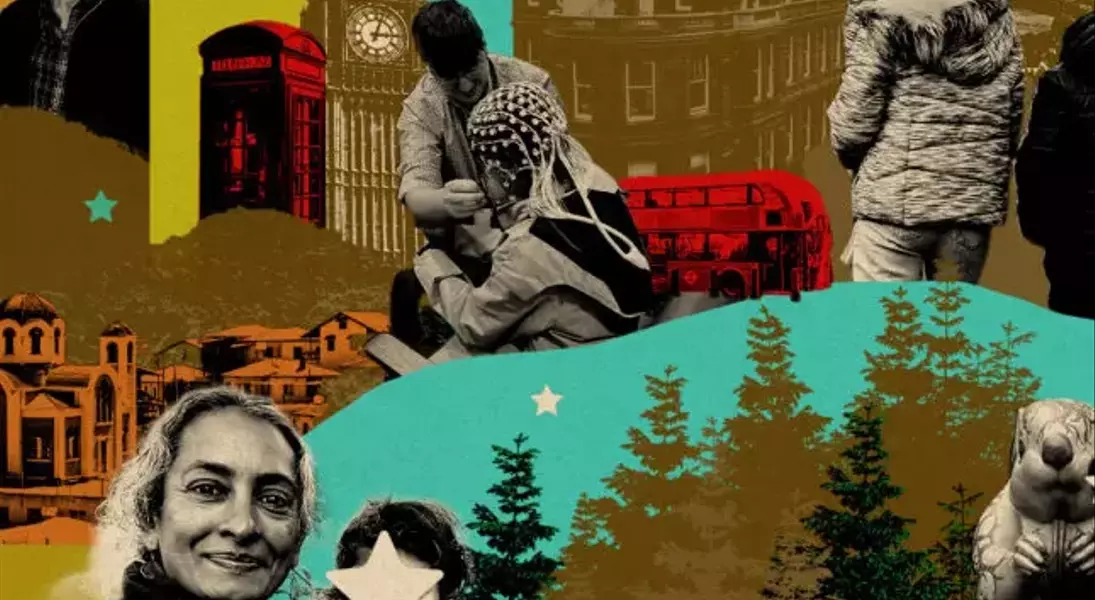
This article chronicles a dedicated mother's extensive five-year endeavor to forge connections with other families navigating the challenges of Nicolaides-Baraitser syndrome (NCBRS). Driven by the imminent adulthood of her daughter, Maya, the mother embarked on a profound exploration, delving into scientific literature and engaging with online communities. Her journey spanned continents, taking her to Cyprus, England, and various locations across the United States. Through her persistent efforts, she not only unearthed the foundational research behind NCBRS but also played a pivotal role in cultivating a global support network for the approximately 337 individuals worldwide currently diagnosed with this rare genetic disorder.
The Journey to Understand and Unite: A Mother-Daughter Quest for the NCBRS Community
In October 2020, a pediatric geneticist delivered a life-altering diagnosis to Deepa Fernandes and her husband, Matt: their 11-year-old daughter, Maya, had Nicolaides-Baraitser syndrome (NCBRS), a genetic condition so exceptionally rare that only 61 cases had been documented in scientific literature at the time. The doctor's caution to "Don't Google" initially instilled fear, prompting Deepa to rely on Maya as her guide through this new reality. However, five years later, as Maya approached her 18th birthday, Deepa embarked on her own investigation, driven by questions about Maya's future and unexplained episodes of dysregulation.
Her search led her to scientific papers and an online platform showcasing children with NCBRS, many of whom strikingly resembled Maya, often displaying the characteristic "beautiful smile." Deepa discovered the exclusive nature of this condition, with only 337 known cases globally. With Maya's spirited consent, a mother-daughter quest began, taking them to a Cypriot mountain village, the British countryside, and across the United States, to find Maya's extended genetic family and deepen their understanding of NCBRS.
Their first destination was the Troodos Mountains in Cyprus, where they met Paola Nicolaides, one of the two clinicians who first described the syndrome. Nicolaides recounted her experience during the 1974 Turkish invasion and how it shaped her desire to give back. In 1992, while training at Great Ormond Street Children's Hospital in London, she encountered June, a young patient with unique symptoms like sparse hair and intellectual difficulties. Her collaborative paper with Michael Baraitser in 1993 marked the initial scientific documentation of the syndrome.
The journey continued to England, where Great Ormond Street Children's Hospital remained a hub for diagnosing rare conditions. Raoul Hennekam, a Dutch professor of pediatrics and clinical genetics, recalled seeing a patient with distinctive features in 2005, reminiscent of June. This led him to Nicolaides and Baraitser's initial description. Collaborating with Sérgio Sousa, a Portuguese medical resident, Hennekam’s team meticulously pursued more NCBRS cases. In 2007, Sousa examined the now 32-year-old June, noting the progressive nature of certain NCBRS features.
Meanwhile, across the Channel, doctors Gilles Morin in France and a Belgian team including Ingrid Witters and Jean-Pierre Fryns independently identified patients with similar symptoms, eventually proposing a new syndrome named after Nicolaides and Baraitser. By 2009, Hennekam and Sousa published a groundbreaking study on 18 new patients. A pivotal moment arrived in 2010 when they, alongside a Belgian team, identified alterations in the SMARCA2 gene as the common genetic link among 34 of 36 patients. This discovery enabled routine genetic testing to detect SMARCA2 variants, leading to diagnoses like Maya's.
The narrative then shifted to the English countryside, where in 2006, Lee and Michelle Reavey welcomed their son, Callum. Diagnosed with NCBRS in 2007 as the seventh known case, Callum's early years were marked by significant developmental challenges. Undeterred, the Reaveys provided intensive therapies and, in 2010, organized the first-ever NCBRS gathering, bringing together six families, Hennekam, and Sousa. This event cemented the need for community support. Today, Lee Reavey spearheads the NCBRS Worldwide Foundation, organizing global conferences and partnering with research institutions to map symptom variances among patients.
Back in London, at the University College of London’s Institute of Neurology, researcher Stephanie Efthymiou highlighted the funding challenges for rare disorder research, specifically her efforts to establish a biobank for NCBRS patients and a mouse-model study. Despite the difficulties, the NCBRS Worldwide Foundation's collaboration with the Jackson Laboratory for Rare Disease in Maine provided a breakthrough. This initiative, partially crowdfunded by the NCBRS community, aims to engineer a specialized mouse model to study SMARCA2 mutations, a crucial step towards developing gene therapies and treatments.
In Baltimore, Jacqueline Harris, a pediatric neurologist at Kennedy Krieger Institute, is leading a “deep phenotyping” study to thoroughly understand the cognitive and behavioral impacts of NCBRS. She emphasizes the potential of epigenetic therapies to significantly improve the quality of life for NCBRS patients, even if not fully normalizing communication. However, her research also faces funding hurdles, particularly due to cuts in research funding and the need for private philanthropy and more patient participation. Maya's positive experience with Dr. Harris, despite her fear of doctors, even sparked a new aspiration: to become a doctor herself.
Looking to the future, Lee Reavey continues his advocacy, despite Callum, now 20, being unlikely to benefit from immediate genetic therapies. The Reaveys, like Ruth, the mother of June (the first described NCBRS patient), have chosen to build their lives around Callum, providing unwavering support. Maya's encounters with other NCBRS children across the US, from Jack in Baltimore to Mae in Chicago, have fostered a profound sense of belonging. Through these interactions, she has discovered her "people," finding comfort and understanding in shared experiences. This journey has not only connected families but also illuminated the critical need for a supportive community to navigate a world often ill-equipped for rare conditions.
This inspiring narrative underscores the profound impact of parental advocacy and the resilience of a community united by a shared, rare genetic condition. It highlights how personal journeys can ignite global movements for understanding, support, and scientific advancement. The story not only sheds light on the challenges faced by families dealing with rare diseases but also celebrates their unwavering spirit and determination to forge a better future for their children. It serves as a powerful reminder that even in the face of daunting medical complexities, human connection and collective effort can lead to remarkable progress and a deep sense of belonging.